Agent activity
Checking for WebMCP support
Requests are only sent after you confirm them. How this works
Deployment architecture
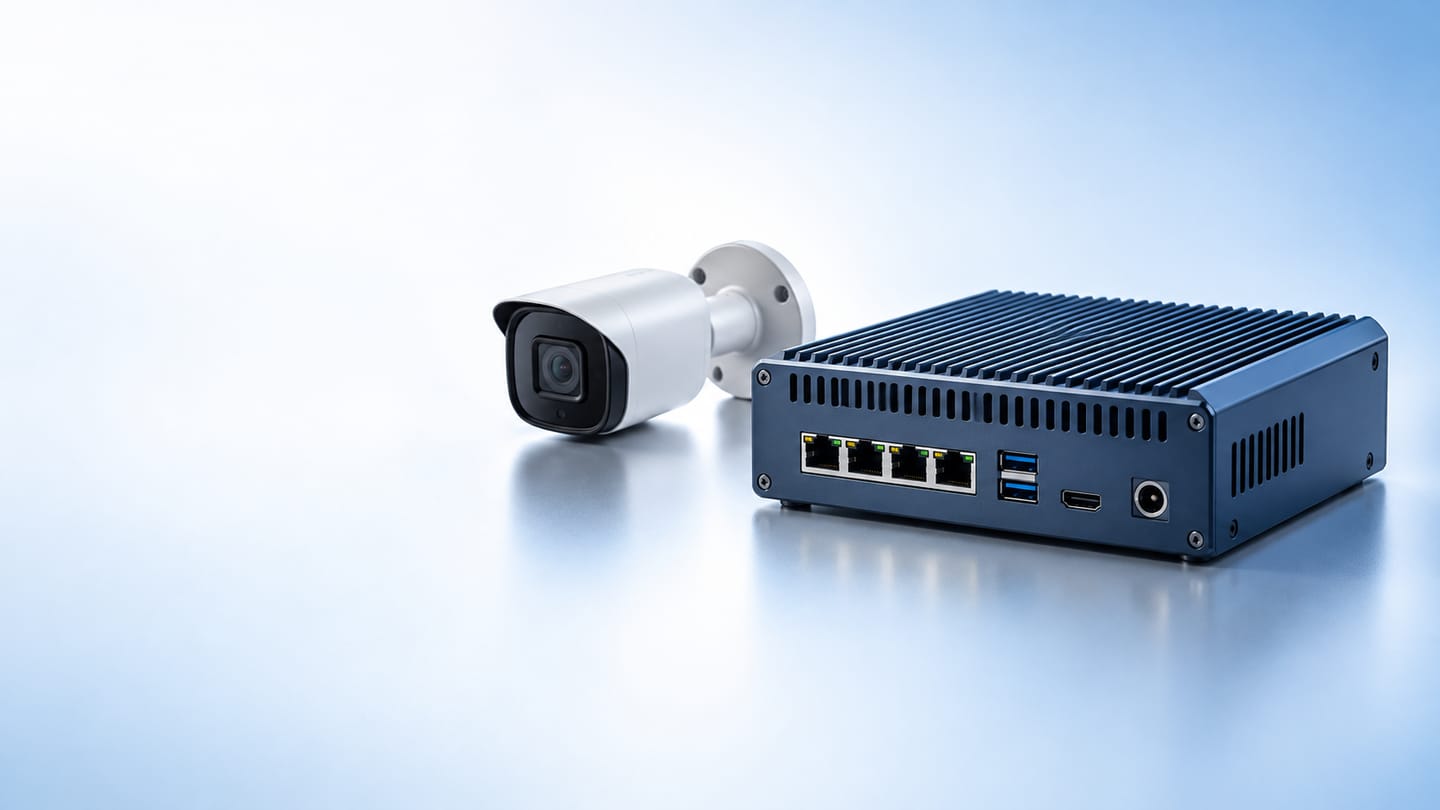
ATLAS AIBOX: Ayonix edge hardware for local processing
In short
Ayonix states that ATLAS BOX and ATLAS AIBOX are edge hardware that run recognition and analytics inside the physical environment rather than in a cloud region. No processor, accelerator, channel-count, throughput, power or environmental specification is published on this site, because none has been supplied by Ayonix.
Who this suits
- Sites that need analytics processing local to the cameras
- Deployments where video must not leave the physical environment
- Remote locations with constrained backhaul
- Estates standardising on one edge platform across sites
- Environments where Ayonix face recognition and video analytics are deployed together on local hardware
Architecture
How it is put together
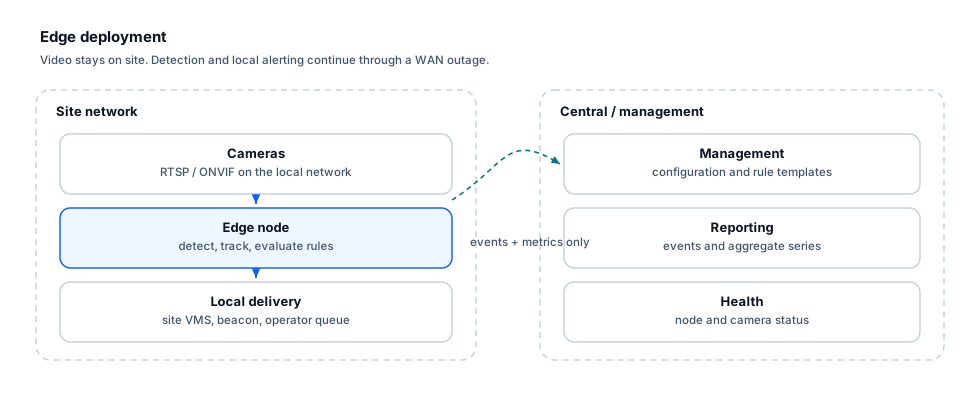
- The appliance sits on the local network with the cameras it serves.
- Streams are consumed locally over RTSP or ONVIF.
- Detection, tracking and rule evaluation run on the appliance.
- Events and aggregate series are forwarded to a VMS, operator queue or central layer.
- Where configured, Ayonix face recognition can run on the same local hardware as a separate product capability with its own governance requirements.
Characteristics
What this model means in operation
The properties below are what actually differentiate the deployment models from each other.
- Bandwidth
- As for any edge deployment: continuous video stays local and only events and aggregate series cross the WAN.
- Latency
- Local processing avoids a WAN round trip for detection and local alerting.
- Privacy
- Processing inside the physical environment is the published design intent, which addresses data-residency requirements that cloud processing cannot.
- Resilience
- Per-site independence, with local alerting continuing through a WAN outage. Specific redundancy options should be confirmed with Ayonix.
- Central management
- Configuration and health management follow the edge and multi-site patterns described elsewhere on this site. Platform-specific management detail should be confirmed with Ayonix.
- Software updates
- Update mechanism and cadence should be confirmed with Ayonix as part of architecture review; no update process is described here without that confirmation.
- Health monitoring
- Stream availability, processing headroom and appliance reachability are the metrics any edge deployment requires. Platform-specific health reporting should be confirmed with Ayonix.
- Logging
- Structured local logging with central aggregation of operational events, following the edge deployment pattern.
- Backup
- Configuration backup so a replaced appliance can be restored. Specific backup mechanisms should be confirmed with Ayonix.
- High availability
- Redundancy options for the appliance should be confirmed with Ayonix. General edge redundancy patterns apply.
- Scaling
- Scales by adding appliances per site or per camera group. Per-appliance capacity is a sizing question that Ayonix must answer against your stream profiles.
Planning
Sizing inputs, cost and limitations
Hardware sizing inputs
- Camera count, resolution and codec per location
- Analysis frame rate required by the intended rules
- Number and complexity of concurrent rules per camera
- Whether face recognition will run on the same hardware alongside video analytics
- Local evidence retention requirement
- Environmental conditions — temperature, mounting, power and network at the installation point
Sizing is done against your actual stream profiles and rule set by Ayonix. No channel-count or throughput figure is published on this site, because none has been supplied.
Cost considerations
- Appliance cost per site or per camera group
- Installation and any site visits required
- Reduced WAN cost compared with centralised processing
- Hardware refresh cycle
- Whether one appliance can serve both analytics and face recognition, which changes the sizing and the cost per site
Limitations
- No hardware specification is published on this site. Channel counts, throughput, accelerator type, power draw and environmental ratings must be supplied by Ayonix before they can be relied on in a design.
- Per-appliance camera capacity is a sizing exercise against your actual stream profiles, not a published figure.
- Running face recognition and video analytics on the same appliance changes the sizing and should be scoped explicitly.
- Physical access is required for hardware faults.
Frequently asked questions
How many cameras does an ATLAS AIBOX support?
Ayonix has not published a channel-count figure, and this site will not invent one. Capacity depends on stream resolution, analysis frame rate and the rule set per camera. Request sizing from Ayonix against your actual camera inventory.
What are the hardware specifications?
No processor, accelerator, memory, storage, power or environmental specification has been located in Ayonix public materials, so none is published here. These are listed in the claims register as requiring Ayonix confirmation before publication.
Can it run face recognition and video analytics together?
Ayonix describes ATLAS hardware as running both recognition and analytics locally. Whether a single appliance can run both simultaneously at your required scale is a sizing question for Ayonix, and face recognition carries its own governance requirements that must be addressed separately.
Compare with other models
-
Edge video analytics
Run analytics next to the cameras so video stays on site, alerts survive a WAN outage and only…
-
On-premise video analytics
Run analytics on your own servers inside your network, alongside an existing VMS, with full co…
-
Air-gapped video analytics
Run analytics with no outbound connectivity for defence, utilities and regulated operational n…
-
Hybrid video analytics
Process video locally and aggregate results centrally, combining local alerting resilience wit…
-
Multi-site video analytics
Manage rules, thresholds, updates and health across many sites so measurement is comparable an…
- Author
- Gabriel Bamola, Chief Marketing Officer, Ayonix
- Technical review
- Dr Sadi Vural, Founder and Chief Executive Officer, Ayonix
- Published
- Last reviewed
Get an architecture review for your estate
Site count, connectivity, data-residency constraints and whether alerting must survive an outage decide the model. An architecture review works through those with you and produces the sizing inputs Ayonix needs.