Agent activity
Checking for WebMCP support
Requests are only sent after you confirm them. How this works
Industry
Video analytics for healthcare estates and public areas
In short
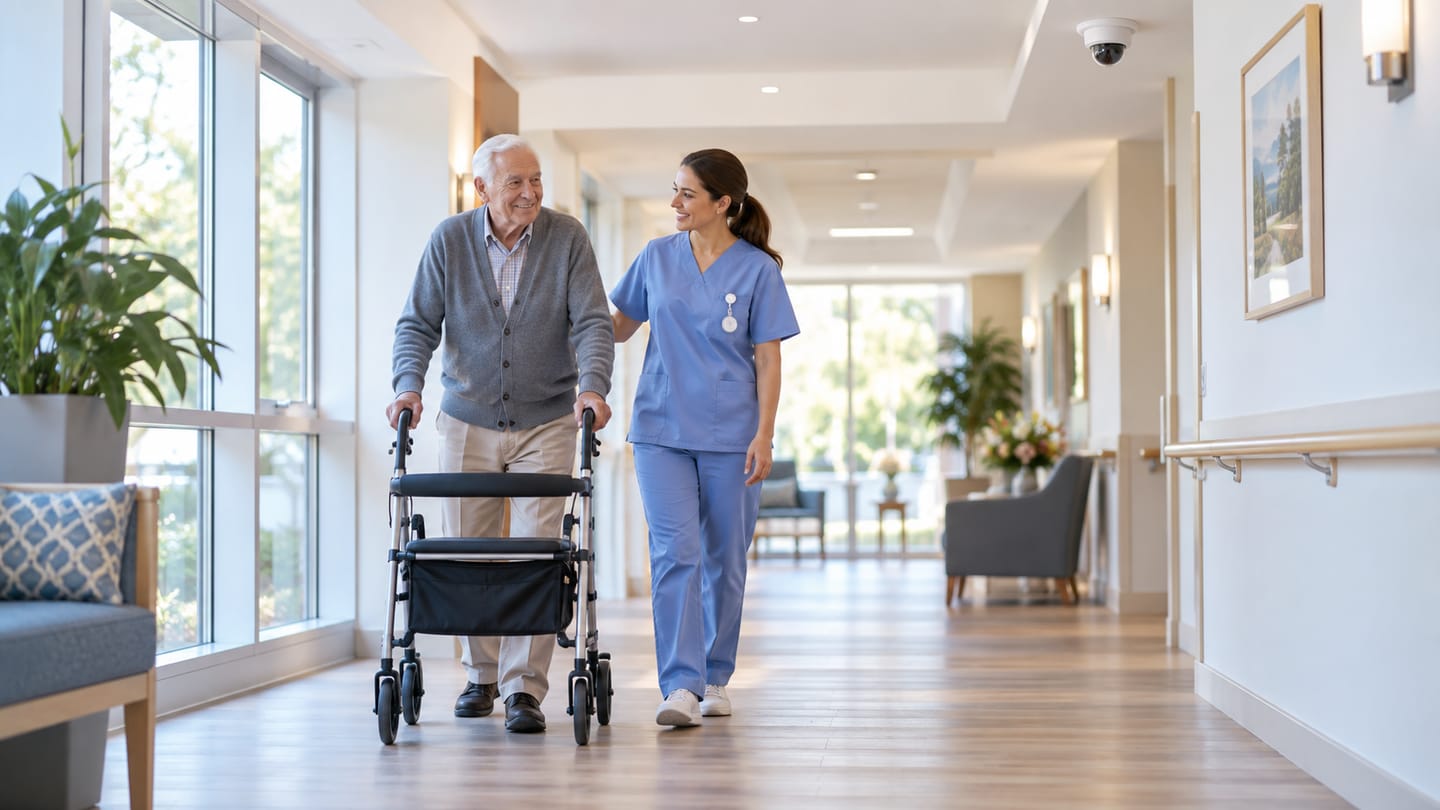
Healthcare video analytics measures waiting-area occupancy, entrance footfall, car park availability and restricted-area access across a hospital estate. Clinical and patient-care areas are excluded by design; the value lies in public areas, estates and site security where privacy exposure is manageable.
The problem
What healthcare teams are dealing with
- Outpatient waiting areas overflow and nobody knows until patients are standing.
- Car parks fill before the morning clinic starts and patients arrive late having circled for twenty minutes.
- Plant rooms, drug stores and records areas are accessed outside permit windows without a timely record.
- Estates teams cannot evidence how public spaces are actually used when planning a reconfiguration.
- Any camera analytics proposal in a hospital attracts immediate and justified information-governance scrutiny.
Recommended
Analytics that address these problems
Only capabilities Ayonix publishes appear here. Each links to its full scope, camera requirements and limitations.
- Solution-design configuration
Occupancy monitoring
Occupancy monitoring maintains a running count of people inside a defined space by combining directional entry and exit counts at every doorway. Thr…
Read the detail → - Published capability
People counting
Ayonix people counting counts movement across a virtual line on an existing camera view and compares directional flow through the day. It produces e…
Read the detail → - Solution-design configuration
Parking occupancy analytics
Parking occupancy analytics uses Ayonix vehicle detection over defined bay or area zones to report how full a car park is, live and over time. Becau…
Read the detail → - Published capability
Restricted area monitoring
Restricted area monitoring raises an event when a person or vehicle is present inside a zone that should be empty or access-controlled at that time.…
Read the detail → - Solution-design configuration
Queue management
Queue management applies Ayonix dwell measurement and people counting to a defined queue area. It reports how many people are waiting and how long t…
Read the detail → - Solution-design configuration
Entrance and exit analytics
Entrance and exit analytics reports directional volumes at each doorway of a building or site. Ayonix people counting already counts entry and exit …
Read the detail →
Camera placement
Where cameras need to be, and why
Camera position decides more of the outcome than any software setting. These are the placements that matter in this sector.
| Location | Purpose | What matters |
|---|---|---|
| Main entrances | Directional footfall | Overhead placement at the threshold; entrance counting is low-sensitivity and high-value. |
| Outpatient waiting areas | Zone occupancy | Elevated views over the waiting zone only, framed to exclude consultation room doors where practical. |
| Car parks | Area occupancy | Height determines whether rear rows can be reported at all. |
| Plant rooms and secure stores | Out-of-permit presence | Schedule-aware rules aligned to maintenance and pharmacy access windows. |
| Site perimeter where applicable | Intrusion detection | Normally limited to estates boundaries rather than clinical buildings. |
Workflow
From event to acknowledged action
Event workflow
- 1 Public-area and estates cameras are ingested; clinical and patient-care areas are excluded by design.
- 2 People and vehicles are detected and tracked in the permitted zones only.
- 3 Counting, occupancy and schedule-aware access rules are evaluated.
- 4 Occupancy series publish to estates and operational dashboards.
- 5 Restricted-area events route to site security with evidence.
- 6 All access to event evidence is role-restricted and audit-logged.
Operator workflow
- 1 Outpatient coordinator sees waiting-area occupancy approaching capacity and opens an overflow area.
- 2 Car park occupancy is published to entrance signage and the patient app.
- 3 Site security receives an out-of-permit store access event with a clip.
- 4 Estates uses public-area utilisation data in reconfiguration planning.
- 5 Information governance reviews access logs on the agreed cycle.
Operations
Dashboards, integration and deployment
Dashboard metrics
- Waiting-area occupancy against capacity by clinic session
- Entrance footfall by interval
- Car park occupancy by area and time
- Out-of-permit access events by location
- Evidence access audit completeness
- Camera availability
Integration options
- REST and webhook delivery into estates and patient-flow systems
- Car park signage and patient app integration
- VMS alarm delivery for site security events
- ONVIF and RTSP ingestion from the estate camera network
Deployment options
- On-premise processing inside the trust or hospital network, which is the normal requirement
- Edge processing for remote estates buildings
- Air-gapped deployment where the clinical network is isolated
- Multi-site management across a hospital group
Evidence
Deployment pattern
Estate public-area pattern
Car park occupancy and entrance counting first, waiting-area occupancy where governance permits, and schedule-aware access rules on estates infrastructure.
All measurement is validated on your own site. No figures from other trusts or hospitals are published.
This is an anonymised pattern describing how a deployment of this kind is structured. It is not a named customer reference. No customer names, logos, testimonials or measured results are published on this site, because none have been supplied for publication. More on how evidence is handled .
Governance
Privacy and governance in this sector
- Clinical areas, treatment spaces, bed bays and patient-care corridors are excluded by design; deployment is limited to public areas, car parks and estates infrastructure.
- All outputs are aggregate; no patient is identified and no clinical data is processed.
- A data protection impact assessment and information-governance approval should precede deployment, not follow it.
- Demographic estimation is not appropriate in healthcare settings and is not part of the standard pattern.
- Evidence access must be role-restricted and audit-logged, with retention set to the shortest period supporting the security or estates purpose.
Frequently asked questions
Can analytics be used in clinical areas?
Not in this pattern. Clinical and patient-care areas are excluded by design. The operational value is in public areas, car parks and estates infrastructure, where the privacy exposure is manageable and the governance case is straightforward.
Does this process patient data?
No. Counting and occupancy outputs are aggregate numbers with no identity, no clinical information and no link to any record. That distinction is usually the crux of the information-governance conversation.
What approval is needed before deployment?
A data protection impact assessment and information-governance sign-off are normally required, and it is far faster to complete them before the technical work than to retrofit them afterwards.
Other industries
- Author
- Gabriel Bamola, Chief Marketing Officer, Ayonix
- Technical review
- Dr Sadi Vural, Founder and Chief Executive Officer, Ayonix
- Published
- Last reviewed
Design a healthcare pilot around your own cameras
Start with a camera readiness review and a log-only baseline, then measure against acceptance criteria we agree before the pilot begins. That is what turns an analytics evaluation into a decision.