Agent activity
Checking for WebMCP support
Requests are only sent after you confirm them. How this works
Controlled pilot
A pilot should end in a decision, not a debate
In short
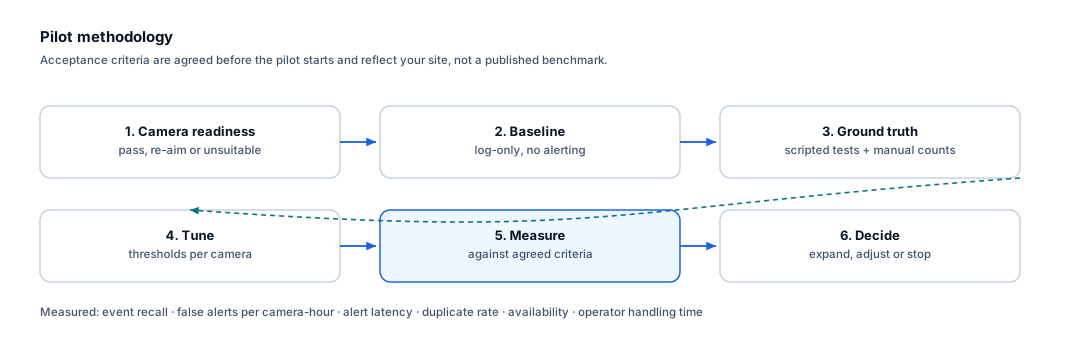
A controlled pilot establishes what video analytics actually does on your cameras, in your conditions. It runs in six phases — camera readiness, log-only baseline, ground truth, tuning, measurement, decision — against acceptance criteria agreed with you before it starts, so the result is evidence rather than an argument about whose numbers to believe.
Method
Six phases
Preparation
What a pilot needs from you
Most pilot delays come from missing camera information rather than from the analytics. Gathering these first shortens everything that follows.
Pilot inputs
- Objective — what the pilot must establish, stated as a question with a yes or no answer
- Location and the specific cameras in scope
- Camera resolution, codec and delivered frame rate (measured, not configured)
- Field of view, mounting height and downward angle per camera
- Lighting across the operating schedule, including the worst realistic condition
- Weather exposure for outdoor cameras
- Expected object size at the furthest point of interest
- Occlusion sources — racking, vegetation, parked vehicles, structure
- The behaviour or event to detect, described operationally
- Alert workflow: who responds, through which console, and how quickly
- Operating schedule and when rules should be active
- Ground-truth method agreed before the pilot starts
- Acceptance metrics and their thresholds
- Who reviews the results and makes the decision
What gets measured
- Event recall against scripted ground truth
- False alerts per camera-hour, counted by the operator
- Alert latency from event to operator queue
- Duplicate alerts per genuine event
- System and stream availability across the pilot period
- Operator handling time per alert
- Search time where investigation workflows are in scope
- Counting error against manual counts
- System resource usage against the deployed hardware
No universal acceptance numbers are published on this site. A threshold only means something once it is attached to your use case, your cameras and your environment.
Get started
Request a pilot
Tell us what the pilot must establish. An engineer will reply with the camera information needed and a proposed scope.
Frequently asked questions
What acceptance thresholds should we set?
Ones that reflect your environment and your use case. This site publishes no universal acceptance numbers, because a threshold that is achievable at a well-lit indoor doorway is not achievable on a 200-metre fence line at night. Thresholds are agreed with you, from your baseline, before the pilot starts.
How long should a pilot run?
Long enough to cover the variation that matters. Six weeks is typical: roughly two weeks log-only to establish a baseline, then tuning, then a measured period covering at least one poor-weather spell and one full operating cycle including weekends.
What happens if cameras fail the readiness review?
You are told which ones, and why, before anything is configured. Some will need re-aiming, some a lens change, and some are genuinely unsuitable for the rule intended. Discovering that at the start is the single biggest predictor of whether the deployment succeeds.
Do we have to buy anything to run a pilot?
Scope, commercial terms and any hardware requirement are agreed with Ayonix before a pilot starts. This site does not publish pricing or commercial terms, because none have been supplied for publication.